Supreme Court's Big Real Estate Rulings 2026: What Every Homebuyer, Investor & Property Owner Needs to Know

GFS Realtors
We provide deep market insights and strategic advice for real estate buyers, sellers, and investors.
Expert at providing deep market insights and strategic advice for real estate

Supreme Court's Big Real Estate Rulings 2026: What Every Homebuyer, Investor & Property Owner Needs to Know
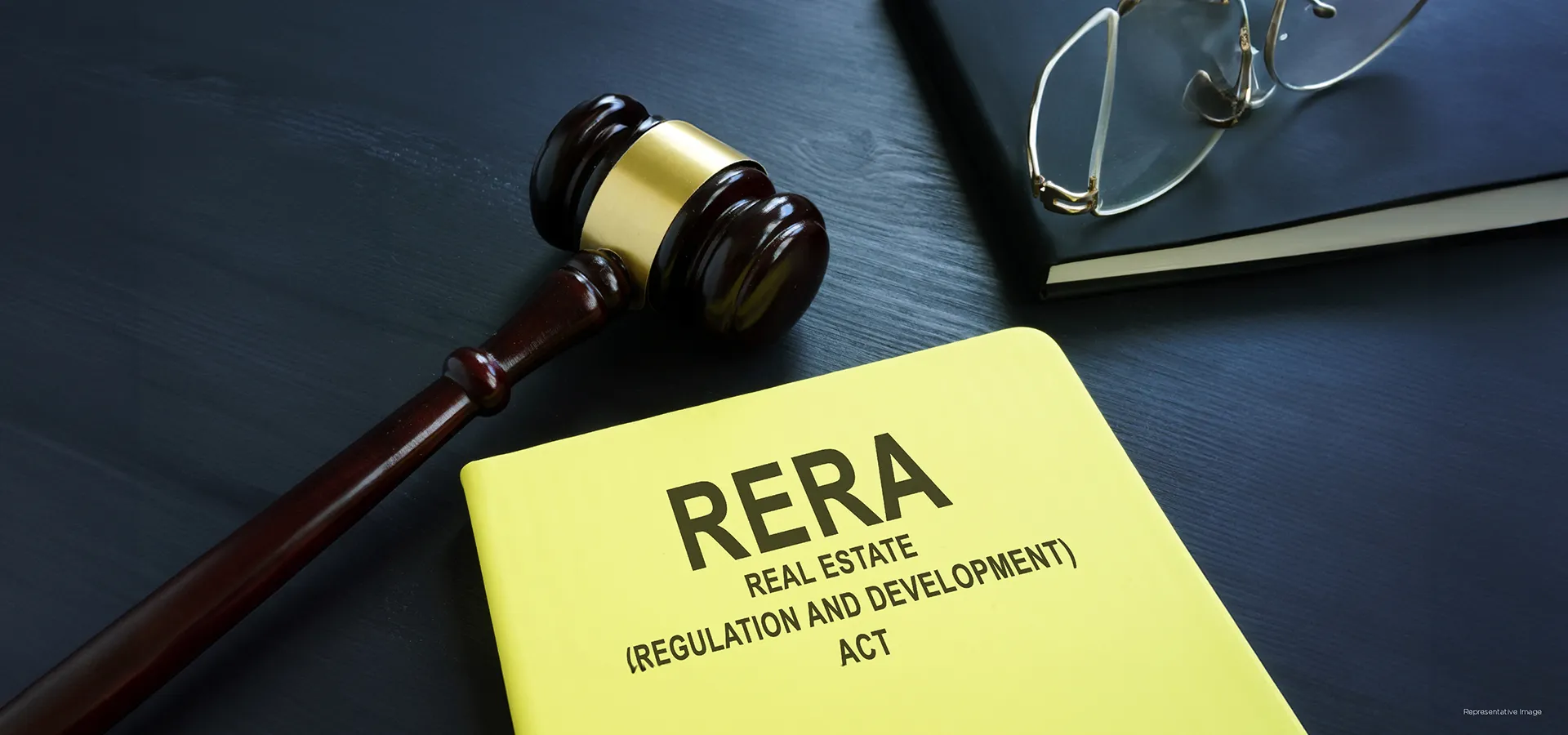
2026 has been a landmark year in India's courtrooms for anyone who owns, buys or invests in property. The Supreme Court has drawn a hard line on where a homebuyer can fight a builder, warned a developer that ignoring buyers can lead to jail, ruled that insolvency is no longer a shield for promoters, and sharpened who counts as a protected "consumer" — all while openly questioning whether RERA is truly working, yet leaving the law firmly in force. Here's the plain-English guide to every ruling that matters, and exactly what it means for you.
⚠️ A quick, important clarification up front: despite dramatic headlines, RERA has NOT been abolished. The law remains fully valid. Only Parliament can repeal it — the Court's criticism is pressure for reform, not removal. We'll separate fact from noise throughout.
📑 What This Guide Covers
Why 2026 matters for property
Ruling 1 — RERA vs Consumer Forum: choose your battlefield
Ruling 2 — Builders can't ignore orders ("next step is jail")
Ruling 3 — Insolvency is no longer a builder's shield
Ruling 4 — Arbitration clauses can't override your consumer rights
Ruling 5 — Who is (and isn't) a "consumer"
The RERA "abolish" controversy — what really happened
What it means for homebuyers
What it means for investors
What it means for property owners
Your 2026 action plan
Expert view & takeaways
1. Why 2026 Matters for Property
For years, the biggest frustration in Indian real estate wasn't a lack of rights — it was the difficulty of enforcing them. Buyers won orders they couldn't collect on; builders hid behind insolvency, arbitration clauses and procedural mazes; and the same grievance bounced between forums for years.
2026's rulings attack exactly that gap. Individually they're technical; together they send one message — the courts are tightening the screws on builder accountability and clarifying the rules of the fight. Whether you're buying your first flat in Siliguri, investing across growth corridors, or you already own property, these shifts change how you protect your money. Let's take them one at a time.
2. Ruling 1 — RERA vs Consumer Forum: You Must Choose Your Battlefield
The ruling (March 2026): In Kabra & Associates v. Rekha Rajkumar Hemdev, a Supreme Court bench (Justices Sanjay Kumar and K. Vinod Chandran) held that once a homebuyer elects to pursue a remedy under RERA for a cause of action, they cannot later switch to a consumer forum for the same grievance. The Court applied the doctrine of election and set aside an NCDRC order that had allowed exactly such a switch.
Plain English: you have powerful forums — RERA and the consumer commissions (NCDRC/State/District) — but for the same complaint (say, a possession delay), you must pick one and commit. You can't lose in one and re-fight the identical issue in the other.
Why it matters: choosing the right forum at the outset is now a make-or-break decision. RERA is often faster and real-estate-specific; consumer forums have their own strengths. Getting this choice right — ideally with legal advice and a well-drafted agreement for sale in hand — can decide your entire case.
3. Ruling 2 — Builders Can't Ignore Orders ("The Next Step Is Jail")
The ruling (July 2026): In the Parsvnath Developers matter, the Supreme Court gave the developer a final week to deposit the entire recoverable amount with 12% annual interest, warning bluntly that failure to comply would lead to imprisonment. The bench left "no misunderstanding about our order."
Plain English: winning a judgment is worthless if the builder simply ignores it. The Court signalled it will now enforce buyer-favourable orders with real teeth — including the threat of jail for non-compliant promoters.
Why it matters: this dramatically increases the practical value of a homebuyer's win. For years, buyers with orders in hand still couldn't recover their money. A credible threat of imprisonment changes the incentive for defaulting developers to actually pay up.
4. Ruling 3 — Insolvency Is No Longer a Builder's Shield
The ruling (July 2026): The Supreme Court observed that an IBC insolvency moratorium against a real estate company does not automatically bar consumer complaints against its promoters and directors in their personal capacity.
Plain English: previously, the moment a builder company entered insolvency (CIRP), a statutory moratorium froze proceedings, and buyers were stranded at the back of the creditor queue. Now the Court has distinguished the company from the individuals who ran it — so promoters and directors can potentially be pursued personally for their own acts, even during the company's insolvency.
Why it matters: it pierces the corporate veil that defaulting builders hid behind, opening a real alternate recovery route. If you're a buyer in a stalled/insolvent project, the strategy now may involve naming the promoters/directors personally — a decision for a qualified lawyer, but a genuinely important new lever.
5. Ruling 4 — Arbitration Clauses Can't Override Your Consumer Rights
The ruling (2026): The Court reaffirmed that once a consumer complaint is admitted, a builder cannot force the dispute into arbitration merely by pointing to an arbitration clause in the builder-buyer agreement.
Plain English: developers often bury an arbitration clause in the fine print to push buyers out of consumer forums into a private, developer-friendlier process. The Court has protected the buyer's statutory right to the consumer forum — a contract clause can't quietly strip it away.
Why it matters: it's a reminder to read every clause (how to read an agreement for sale) — but also reassurance that your consumer protection can't be contracted away by fine print alone.
6. Ruling 5 — Who Is (and Isn't) a "Consumer"
The ruling (January 2026): The Supreme Court held that landowners entering into Joint Development Agreements (JDAs) with builders are not "consumers" under the Consumer Protection Act — so they can't use the consumer forum route for JDA disputes.
Plain English: the consumer forums are meant for end-users — ordinary buyers of homes — not commercial players in a profit-sharing development deal. Landowners in JDAs must pursue other remedies (civil courts, arbitration, contract).
Why it matters: if you own land and are considering a JDA with a developer (a common structure in growing markets like Siliguri), understand that your legal remedies differ from a homebuyer's. Structure the JDA carefully, with legal advice, from day one.
7. The RERA "Abolish" Controversy — What Really Happened
This is where headlines misled a lot of people, so let's be precise.
During 2026 hearings, the Supreme Court sharply criticised RERA's functioning — calling aspects "disappointing" and observing that authorities sometimes seem to help builders more than buyers, with one strong oral remark even floating whether it'd be "better to abolish" an ineffective regulator. Separately, the Prime Minister's May 2026 Pragati review pushed states to ensure RERA delivers real relief — possession or compensation — not just "disposed" complaint counts.
But here is the fact that matters: there is no judgment striking down RERA. The law is fully valid and in force. Oral remarks in a hearing don't repeal a statute — only Parliament can. What this pressure does is push toward stronger enforcement and reform, which — combined with the accountability rulings above — is, on balance, good news for homebuyer protection. For your on-the-ground rights today, RERA remains your primary shield (WBRERA buyer rights & checklist).
8. 🏠 What It Means for Homebuyers
🎯Choose your forum deliberately. RERA or consumer forum — pick correctly at the start; you can't switch for the same cause. Get advice before filing.
💪Your win now has teeth. Enforcement is tougher on builders — an order in your favour is more likely to translate into money or possession.
🛡️Insolvency isn't the dead-end it was. Promoters/directors may be pursued personally — ask your lawyer about impleading them.
📜Read the fine print. Arbitration clauses can't strip your consumer rights, but a clean agreement still protects you best.
✅Prevention beats litigation. The surest protection is buying right in the first place — verify RERA, title and documents up front with our legal-safety guide, documents checklist and the Promise-to-Property Test.
9. 📈 What It Means for Investors
🔍Developer credibility is now priced in. With courts cracking down, a builder's track record and compliance matter more than ever to your risk — vet it hard (why choosing the right realtor matters).
🏗️Prefer RERA-registered, well-documented projects. They carry lower legal and delivery risk — central to the investor's roadmap and the new vs resale decision.
⚖️Stalled-project plays carry real recovery risk. The insolvency ruling helps, but distressed/under-construction bets still demand deep diligence (under-construction vs ready-to-move).
🌆 The net effect is a healthier market. Stronger accountability = more buyer confidence = more demand for clean, compliant assets — a structural positive for disciplined investors (see why Siliguri is #1).
10. 🏡 What It Means for Property Owners
🤝 JDA owners: know your lane. If you're giving land for development, you're not a "consumer" — structure the JDA and your remedies carefully with legal help.
💰Compliance protects resale value. Clean title, approvals and a documented, dispute-free history make your property more liquid and financeable (resale value test).
📋Keep your paperwork airtight. Mutation, registration and records reduce future dispute risk (land mutation, property registration).
🧾Selling? Plan the tax side too (capital gains guide).
11. Your 2026 Action Plan
✅Before buying: verify RERA registration, title, approvals and the agreement — apply the Promise-to-Property Test and legal-safety checks.
✅If a dispute arises: get legal advice before choosing RERA vs consumer forum — the choice may be final for that cause.
✅ In a stalled/insolvent project: ask your lawyer about pursuing promoters/directors personally.
✅ Reading any agreement: check the arbitration and dispute clauses (clause-by-clause guide).
✅ Always: keep documents, orders and communications organised and in writing.
12. Expert View & Takeaways
Read together, the 2026 rulings mark a genuine shift in Indian real estate — from a system where buyers had rights on paper to one where those rights are becoming enforceable in practice. Builders can't ignore orders, can't hide fully behind insolvency, and can't contract away your consumer protection — and while RERA is under scrutiny, it stands, likely to emerge with stronger enforcement.
For everyone in the market, the lesson is the same one we always return to: the law rewards the prepared. Choose the right forum, read every clause, keep clean documents, and — above all — buy right the first time so you never need a courtroom at all. That's the quiet advantage of doing your diligence up front.
🔑 Key Takeaways
⚖️RERA or consumer forum — pick one for the same cause; no switching (Mar 2026).
🔒Builders can't ignore orders — enforcement now carries the threat of jail (Jul 2026).
🛡️Insolvency ≠ full shield — promoters/directors can be pursued personally (Jul 2026).
📜 Arbitration clauses can't strip your consumer rights.
🧾JDA landowners aren't "consumers" — different remedies apply (Jan 2026).
✅ RERA is NOT abolished — it's fully valid; criticism is pressure for reform.
🎯Prevention wins — verify RERA, title and documents before you buy.
👤 About the Author
Written by the SiliguriProperties Editorial Team — GFS Realtors' hyperlocal property resource for Siliguri & North Bengal, with 20+ years of combined experience helping buyers, investors and owners navigate property law and protect their investments. ✅ Fact-checked by CA Sanjay Goyal — Chartered Accountant & Founder, GFS Realtors.
📚 Related Reads (Solve Every Related Query Here)
The Promise-to-Property Test: Verify a New Project Before Buying
The Complete 2026 Roadmap to Investing in Siliguri Property (GFS)
🏡 Know Your Rights — And Buy So You Never Need Them.
The best protection against a property dispute is buying a clean, verified, RERA-compliant property from the start. That's exactly what we help you do.
👉 Explore verified, RERA-compliant properties on SiliguriProperties.com
📞 Talk to GFS Realtors — Sanat Trade Center, 1st Floor, Sevoke Road, Siliguri-01. Call +91 99320 66666. With 20+ years in this market, we help buyers, investors and owners verify projects, read agreements and buy with confidence — so your investment is protected long before any courtroom.
This article summarises Supreme Court real estate rulings and observations reported during 2026 for general educational and informational purposes only — it is not legal advice. Case outcomes depend on specific facts, and the law and its interpretation evolve. Always verify the current legal position and consult a qualified lawyer for your specific situation before acting. RERA remains valid law as of writing; regulatory details should be confirmed from official sources.