
North Bengal Real Estate 2026: The Complete Guide to Siliguri Property Prices, Infrastructure Boom and Best Investment Areas

GFS Realtors
We provide deep market insights and strategic advice for real estate buyers, sellers, and investors.
Expert at providing deep market insights and strategic advice for real estate
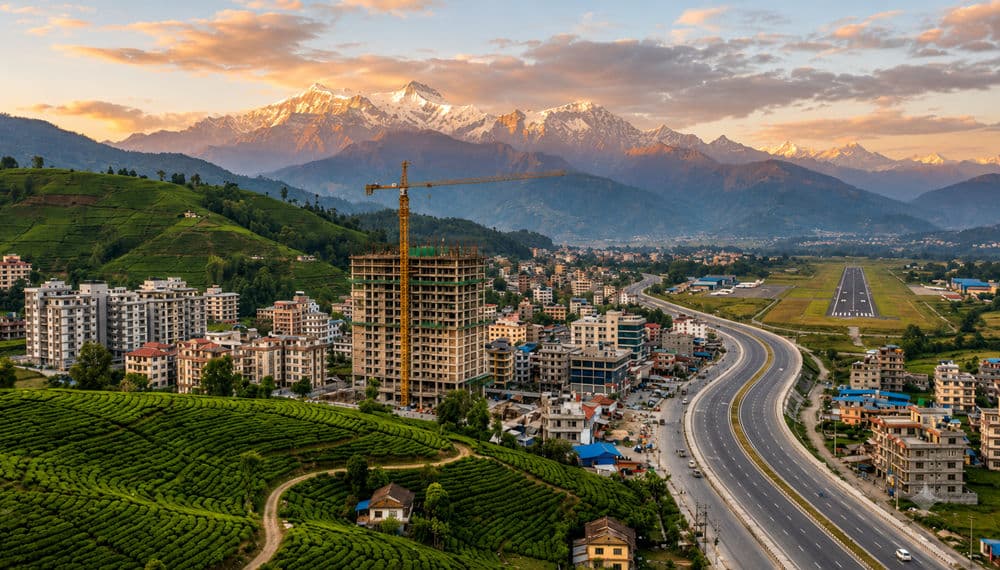
Some pockets of Siliguri have seen property prices climb over 20% in just three years — at a time when several of India's top-tier cities were cooling down. That's not a coincidence. In 2026, North Bengal is getting an airport ten times its current size, a brand-new IT park, India's first metro rail proposal outside Kolkata, and a railway station being rebuilt from the ground up.
If you're researching North Bengal real estate right now, you've probably noticed the sudden buzz and wondered whether it's genuine growth or just noise. This guide gives you the exact breakdown: what's driving the boom, what property actually costs today (area by area), which locations are worth watching, and the specific checks you need to run before you sign anything. No hype, no sales pitch — just what a careful buyer needs to know.
Quick Summary — If You're Short on Time
North Bengal's property market is being pushed forward by real, budgeted infrastructure — not just rumours: a new Bagdogra Airport terminal, NJP station redevelopment, a proposed metro, an IT park, and new IIT/IIM/AIIMS institutions.
Siliguri property prices currently range from around ₹3,500/sq ft in affordable pockets to premium rates in planned townships like Uttorayon.
Areas like Dagapur and Jyoti Nagar have shown the fastest 3-year price growth (19–23%).
Rental yields in parts of Siliguri run 5–6.2% — noticeably higher than most Indian metros.
Stamp duty in West Bengal is roughly 6–7% plus 1% registration, depending on location and value.
The biggest risks aren't prices — they're unclear land titles, hill-area purchase rules, and tea-garden land regulations. Due diligence matters more here than in mature markets.
Now let's go through each of these in detail.
Why North Bengal Real Estate Is Suddenly in the Spotlight
For decades, North Bengal was treated mainly as a gateway — somewhere you passed through on the way to Darjeeling, Sikkim, or Bhutan. That's changing. In June 2026, West Bengal's government tabled a budget that gave North Bengal an unusually large share of attention, and several of these commitments directly affect property demand.
The Infrastructure Trigger List
Project | Current Status (2026) | Why It Matters for Property |
|---|---|---|
Bagdogra Airport — new terminal | Under construction, targeted for March 2027 | Capacity jumps from ~400 to 3,000 passengers/hour (up to 20 million/year) |
NJP Railway Station redevelopment | Ongoing, ₹500 crore, Amrit Bharat Station Scheme | Daily capacity doubling from 60,000 to 1.2 lakh passengers |
Varanasi–Siliguri High-Speed Rail | Proposed in 2026 budget | Could cut long-distance travel time dramatically |
Siliguri–Jalpaiguri Metro Rail | Feasibility study approved, July 2026 | First metro network outside Kolkata |
Siliguri IT Park | Announced, WB Budget 2026–27 | New jobs typically drive housing and rental demand |
IIT, IIM & AIIMS in North Bengal | Proposed, WB Budget 2026–27 | Education and healthcare hubs pull long-term rental demand |
4th railway line, Malda–NJP | Approved, 2026 | Strengthens freight and passenger capacity through the corridor |
Sivok-Rangpo rail (Siliguri–Sikkim) | Targeted for 2027 | Cuts Siliguri–Sikkim travel to roughly 2 hours |
Bagdogra Airport: The Single Biggest Catalyst
Of everything on this list, the Bagdogra Airport expansion has the most direct, near-term impact on North Bengal property investment. The new terminal will be roughly ten times the size of the existing one, designed to handle 20 million passengers a year instead of the current few million. For context, that's the kind of jump that typically pushes up land values along the airport corridor — in Matigara, Salugara, and the NH27 belt — well before the terminal actually opens.
NJP Station and the "Railway Hub" Narrative
New Jalpaiguri (NJP) is being rebuilt as a world-class station under the Amrit Bharat Station Scheme, with a fully centrally funded ₹500 crore budget. Combined with the proposed Varanasi–Siliguri high-speed rail corridor, NJP is increasingly being positioned as eastern India's next major railway hub — not just a stop on the way to the hills. Property along the NJP–Sevoke Road belt is one to watch precisely because this transformation is still early.
Siliguri IT Park and Education Hubs
The proposed IT park, along with a new IIT, IIM, and AIIMS for North Bengal, is a longer-play catalyst. These projects are still in the proposed or early stage — realistically, their effect on property prices and rental demand will unfold over three to five years, not overnight. If you're buying purely on this thesis, patience is part of the strategy.
A word of caution here, as your consultant: government announcements are not guarantees. Budgets change, timelines slip, and "proposed" is not the same as "under construction." Treat this section as context for why interest is rising — not as a reason to rush into any single deal.
Siliguri Property Price Trends 2026: Area-by-Area Breakdown
Prices in Siliguri vary sharply depending on the exact locality — sometimes by ₹2,000–3,000 per sq ft within just a few kilometres. Here's a realistic, area-wise snapshot of Siliguri property prices in 2026.
Locality | Approx. Price Range (₹/sq ft) | What It's Known For |
|---|---|---|
Uttorayon Township (Matigara) | Highest in the region | Siliguri's only planned township — gated, landscaped, self-contained |
Iskcon Road | ₹4,600 – 6,100 | Mid-to-premium flats, up ~25% in the last year |
Matigara | ₹3,800 – 6,500 | Balanced growth with solid rental demand |
Dagapur / Jyoti Nagar | Mid-range, fast-rising | Among the highest 3-year price appreciation in the city |
Shiv Mandir | Around ₹3,700 | Affordable entry point, decent rental returns |
Champasari | Around ₹3,700 | Budget-friendly, good for first-time buyers |
Ranidanga | Around ₹3,500 | Among the most affordable pockets in Siliguri |
Sevoke Road / NJP belt | Mid-range | Positioned to benefit from railway hub development |
These figures are indicative, based on listings and market data available as of mid-2026. Always confirm current rates locally before finalising a budget — prices shift by street, not just by locality.
Which Siliguri Localities Are Rising Fastest
If capital appreciation is your priority, three names come up repeatedly in recent 3-year price data:
Bhanu Nagar — around 23% appreciation over three years.
Dagapur — close behind, at roughly 23%.
Jyoti Nagar — around 19% over the same period.
These aren't the cheapest areas, but they're where price momentum is genuinely strongest right now, not just where marketing dollars are loudest.
Most Affordable Areas to Buy Right Now
If you're a first-time buyer working with a tighter budget, these localities offer the lowest entry points without being on the far outskirts:
Ranidanga — around ₹3,500/sq ft, among the cheapest well-connected pockets.
Shiv Mandir — around ₹3,700/sq ft, plus one of the better rental yields in the city.
Champasari — around ₹3,700/sq ft, popular with young families and first-time buyers.
Devidanga — similarly priced, growing steadily.
The Premium Pocket: Uttorayon Township
Uttorayon deserves a separate mention because it doesn't behave like the rest of the Siliguri market. It's the region's only true planned township — wide internal roads, dedicated commercial zones, schools, clubs, and 24×7 security within a self-contained layout. Projects here (such as Uttorayon HIG, Lumina, and Skydale) consistently command the highest per-square-foot rates in the region, and resale demand tends to hold up better than in standalone buildings. It suits buyers prioritising lifestyle and long-term resale stability over the lowest possible entry price.
Best Areas to Invest in North Bengal in 2026
Siliguri isn't the only story here. North Bengal spans hill towns, tea country, and forest belts, and each attracts a different kind of buyer with a different goal.
Siliguri City Belt
Matigara, Dagapur, and the Iskcon Road corridor remain the core of North Bengal's urban property market. This is where you'll find the widest choice of RERA-registered flats, established resale markets, and the most liquidity if you ever need to exit.
NJP and the Railway Corridor
Property near NJP and along Sevoke Road is a longer-term, infrastructure-driven bet. Prices here are still catching up to their potential, which is exactly why patient investors are watching this belt closely.
The Hills: Kalimpong
Kalimpong has become the go-to destination for buyers wanting a second home away from city heat and noise, or those exploring the homestay and boutique-hospitality business. Land here doesn't behave like city real estate — appreciation is slower and more location-specific, but the lifestyle and tourism-rental upside is a different kind of return altogether.
Dooars and Tea Country (Alipurduar, Jaigaon, Samuktala)
This is North Bengal's most affordable frontier — eco-tourism resort land, forest-facing plots, and tea-garden-adjacent parcels at prices well below Siliguri's. The upside is real, but so is the complexity: tea-garden land often comes with conversion restrictions (more on this in the checklist below), so this belt rewards buyers who do their legal homework.
Area | Best Suited For |
|---|---|
Matigara / Uttorayon | Township living, closest to Bagdogra Airport, strongest long-term value |
Dagapur / Jyoti Nagar | Investors chasing capital appreciation |
Near NJP | Patient, infrastructure-driven long-term bets |
Sevoke Road corridor | Improving connectivity, rising commercial activity |
Jalpaiguri town | More affordable than Siliguri, potential metro beneficiary |
Kalimpong hills | Second homes, homestays, quiet-retirement buyers |
Dooars (Alipurduar/Jaigaon/Samuktala) | Eco-tourism and resort land, low entry price |
Flats, Plots, or a Second Home — What Should You Actually Buy?
This is the question we get asked most often, so let's keep it practical.
1. Choose a flat if:
You want to move in quickly with minimal hassle.
You prefer lower maintenance and shared upkeep.
You want steady rental income from day one.
Best fit: Matigara, Iskcon Road, or Uttorayon Township.
2. Choose a plot if:
You're comfortable waiting several years for value to build.
You want control over what you eventually construct.
Your goal is capital appreciation over rental income.
Best fit: Dagapur, Jyoti Nagar, or the NJP belt.
3. Choose a second home or resort-style land if:
Your motivation isn't purely financial — you want a personal retreat.
You're interested in the homestay or small hospitality business.
You're comfortable with a longer, more hands-on investment horizon.
Best fit: Kalimpong or the Dooars.
None of these is "the right answer" for everyone. It depends on your timeline, how hands-on you're willing to be, and whether you need income now or growth later.
Stamp Duty and Registration Charges in West Bengal (2026)
This is one of the most-searched questions around North Bengal property investment, and for good reason — it directly affects your budget.
Component | Approximate Rate |
|---|---|
Stamp Duty — Urban areas, property up to ₹1 crore | ~6% |
Stamp Duty — Urban areas, property above ₹1 crore | ~7% |
Stamp Duty — Rural/Panchayat areas | ~5–6% |
Registration Fee (all areas) | 1% of property value |
Worked Example: A ₹50 Lakh Flat in an Urban Area
Stamp duty (6%): ₹3,00,000
Registration fee (1%): ₹50,000
Total government charges: ₹3,50,000 (7% of property value)
Budget for this on top of your purchase price, home loan margin, and any brokerage — it's easy to forget and it adds up fast on a tight budget.
Important: Stamp duty rules change periodically, and West Bengal has revised concessions before. Always confirm the exact, current rate on the official West Bengal Registration portal (wbregistration.gov.in) before finalising your budget. This article isn't financial or legal advice — treat it as a starting point for planning, not the final word.
Rental Yield and ROI: What Return Can You Realistically Expect
If your plan is to buy and rent out, here's what recent data from Siliguri shows.
Locality | Approx. Rental Yield |
|---|---|
Khaprail More | ~6.2% |
Darjeeling More | ~6.0% |
Matigara | ~5.9% |
Dagapur | ~5.6% |
Pradhan Nagar | ~5.0% |
How These Numbers Compare to Other Indian Cities
For context, rental yields in most large Indian metros hover between 2% and 4%. North Bengal's 5–6% range looks genuinely attractive on paper. But yield alone doesn't tell the whole story — also weigh:
Vacancy risk in that specific micro-market, not just the city average.
Maintenance and society charges, which eat into net yield.
Tenant demand drivers — is it students, IT-park employees, or short-term visitors? Each has different stability.
You may also come across marketing claims of 14–18% total annual returns (price growth plus rental combined) from some regional real estate firms. Treat these as promotional estimates, not guarantees — ask for the actual transaction data behind any such claim before relying on it.
10-Point Due Diligence Checklist Before You Buy in North Bengal
This is the part most articles skip — and it's the part that actually protects your money.
Check RERA registration. Any new residential project in West Bengal should be registered under WBRERA. Ask for the registration number and verify it online before paying any token amount.
Verify land title and mutation records through the Banglarbhumi portal. Confirm the seller's name matches official records exactly.
Be extra careful with tea-garden-adjacent land. North Bengal's tea tourism policy currently caps commercial land use in tea estate areas, and conversion rules for such land can be complex — get this reviewed by a local property lawyer before committing.
If buying in Darjeeling or Kalimpong hills, understand that some areas have specific land-purchase regulations, particularly for buyers from outside the region. This varies by exact location — consult a local advocate rather than relying on general information, including this article.
Check flood and erosion history, especially near the Teesta and other rivers — some belts in North Bengal see seasonal riverbank shifts that affect land stability and insurance.
For under-construction projects, confirm the builder's track record and whether their previous projects were delivered on schedule.
Get an encumbrance certificate to confirm the property is free of loans, disputes, or pending litigation.
Visit the site at least twice — once on a weekday and once on a weekend — to get an honest sense of noise, water supply, and neighbourhood activity.
Cross-check the quoted price against at least two other recent transactions in the same locality, not just the seller's asking price.
Keep all payments traceable — avoid large cash components, and insist on proper receipts for every instalment.
None of this is meant to scare you off — North Bengal has plenty of clean, well-documented properties. It's simply that "affordable and scenic" can sometimes mean "under-verified," so a bit of care upfront saves a lot of trouble later.
Common Mistakes First-Time Buyers Make in North Bengal
Buying purely on a "future project" promise — a proposed metro station or highway is not the same as a completed one. Price in the uncertainty.
Skipping the site visit in monsoon season — some low-lying pockets that look fine in winter show drainage or flooding issues between June and September.
Not checking whether the land is tea-garden or forest-adjacent — this can trigger conversion restrictions that aren't obvious from a basic sale deed.
Assuming hill-area rules are the same as plains — Kalimpong and Darjeeling can have different purchase norms than Siliguri or Jalpaiguri.
Chasing the lowest price without checking title — the cheapest plot in a locality is sometimes cheap for a documented reason.
Is North Bengal Real Estate Worth It in 2026? Final Verdict
Here's the honest, consultant's-eye view.
The fundamentals are genuinely improving — not just talked about. An airport ten times its current size, a railway station being rebuilt from scratch, serious metro and bullet-train proposals, and fresh institutional investment (IT park, IIT, IIM, AIIMS) all point in the same direction: North Bengal is finally getting the attention it has long argued it deserved.
At the same time, prices here remain meaningfully lower than in most Tier-1 and even many Tier-2 Indian cities. That combination — improving infrastructure plus low starting prices — is usually what early-stage property booms look like elsewhere in India, before they mature.
But "early-stage" also means less mature systems, so due diligence matters more here, not less. If you do the homework — verify title, check RERA, understand hill and tea-garden land rules — this region offers a rare mix of affordability and a genuine long-term growth story that's becoming harder to find in India's more saturated metro markets.
If you're ready to explore specific listings, the smartest first step is talking to a local property consultant who knows the street-level reality of your shortlisted area — not just the city-wide averages.
This guide is for general information only and isn't financial or legal advice. Property values, government policies, and infrastructure timelines can change — always verify current details with official sources and a qualified local advisor before making a purchase decision.